
OBDSTAR's encrypted Bosch MD1 and MG1 ECU unlocking support has generated significant interest among BMW repair specialists and tuning workshops. Locked MG1CS201 and MG1CS024 units on B48 and B58 engines have historically resisted conventional bench tools, and any credible path into those ECUs is worth understanding. However, the official Q&A surrounding this feature reveals a capability profile that differs sharply from what many users assume "unlock" means in practice.
Bench Access, Not OBD Tuning Access
The single most important clarification is that unlocking an MG1CS201 or MG1CS024 through OBDSTAR does not restore OBD-port flash capability. Once the ECU is unlocked and the cover is closed, off-the-shelf tuning platforms such as Bootmod3 and MHD remain unable to write through the diagnostic connector. Sectors 1 through 3 are restricted, and all subsequent read and write operations must continue to be performed with OBDSTAR hardware on the bench. The unlock state itself is also not persistent in the way some users expect: disconnecting power returns the ECU to a locked condition, requiring a fresh unlock procedure before the next bench session.
This distinction matters commercially. A workshop expecting to unlock an ECU and then hand the vehicle back for customer-side OBD flashing will be disappointed. The OBDSTAR workflow is a bench data-access and file-writing solution, not an OBD tuning gateway.
Hardware Path: ECM-003 Harness and Stable Power
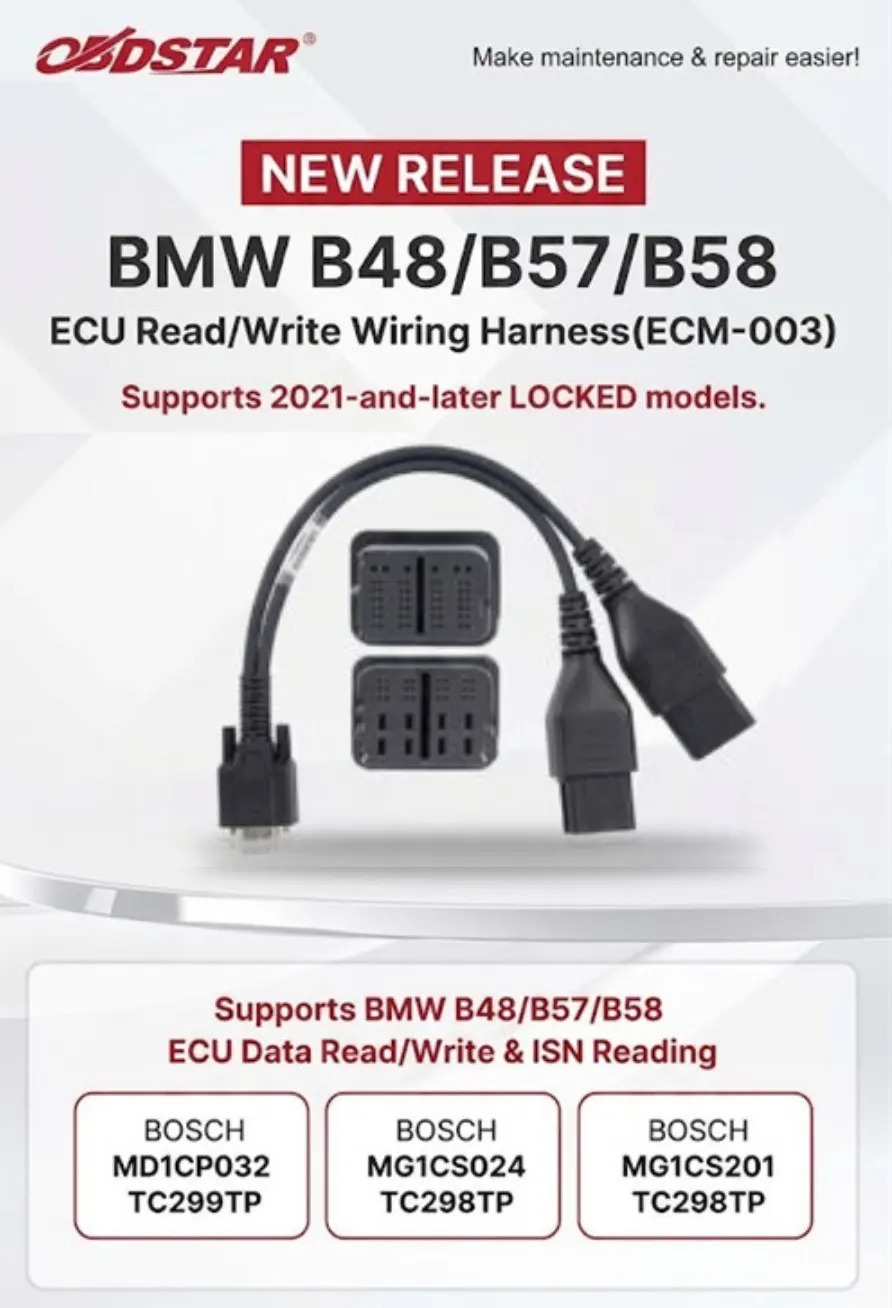
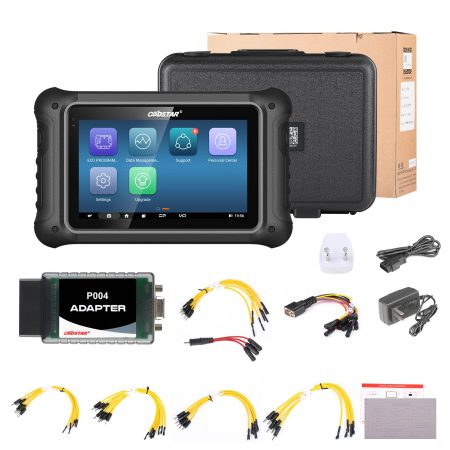
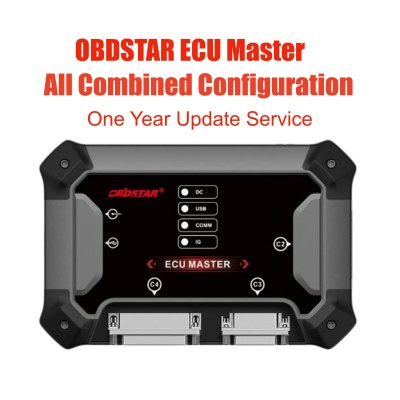
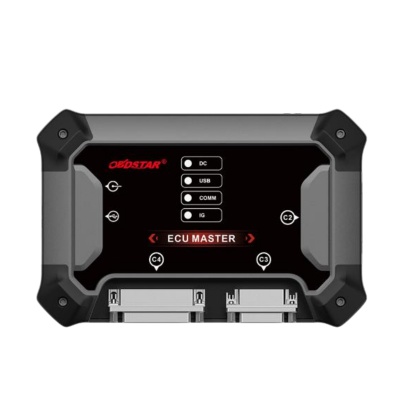
For BMW B48, B57, and B58 applications, OBDSTAR offers the ECM-003 dedicated wiring harness. On the ECU Master platform, this connects alongside the BENCH-DV1 cable; on the G3 and DC706 platforms, a bench converter or P004 adapter bridges the harness to the main tool. The ECM-003 is not cosmetic—it reduces wiring errors on these specific engine families, and OBDSTAR's own documentation directs BMW users toward it for that reason.
Power delivery is equally unforgiving. OBDSTAR specifies a regulated supply delivering at least 60 W at 13–14 V. Voltage instability during the unlock or write process can brick the ECU rather than simply abort the operation. On the ECU Master platform, the bundled 60 W supply meets this requirement; improvised bench power is a risk not worth taking.
The Clone Misconception and the OTP Boundary
A recurring point of confusion involves cloning. A technician may successfully unlock an MG1CS201, read EEPROM, flash, and ISN, write the EEPROM file to a donor unit, and then discover that the flash write fails at sector 4. This is not a tool defect. Locked MG1CS201 units contain an OTP (one-time programmable) sector that cannot be rewritten, which means direct module cloning is not possible. The correct procedure is to transfer the ISN by OBD2 using EEPROM data from both original and donor units, then synchronize the replacement DME to the vehicle with a factory-level tool such as Esys via an ENET cable. OBDSTAR's unlock enables data access; it does not override the hardware-level OTP boundary that makes clone-style replacement impossible on these ECUs.
Tool Compatibility and Coverage Gaps
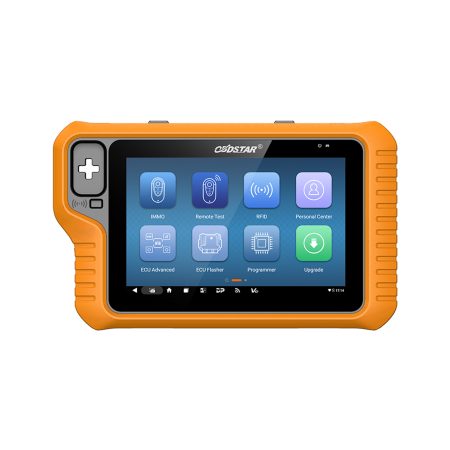
Unlocking is available across the X300 Classic G3 with ECU license, the DC706, and the ECU Master, with the C4-06 adapter serving as the common interface. The feature is free to use provided the device's annual subscription remains active. Coverage, however, is not universal. TC298 and TC2989 processors are supported, including most post-June 2020 MD1 units running TC29X chips, but MD1CS016 units built on the TC399 processor and Indian-market MD1 ECUs with the TC375 chip remain outside the supported range. ISN reading is available; ISN modification is still listed as under development.
For workshops evaluating this capability, the practical summary is straightforward: OBDSTAR provides a bench-level unlock and data-access path for a defined set of Bosch MG1/MD1 processors, with no OBD flashing restoration, no clone override, and no universal processor coverage. Buying the hardware without understanding those boundaries leads to mismatched expectations—and in the case of power or wiring shortcuts, potentially damaged ECUs.
Recent Comment