
Audi Virtual Cockpit clusters on the MLB platform have long been one of the less pleasant mileage jobs in the bay. The cluster is a sealed digital unit, the processor is not accessible through a simple EEPROM read, and the traditional route has meant removing the dashboard, opening the cluster and working around a board that does not welcome casual probing. The recent arrival of 100% OBD mileage calibration for Audi MLB Virtual Cockpit changes the physical workflow before it changes anything else: no dash removal, no cluster disassembly, no bench setup. For shops already using the OBDSTAR CG100X as their mileage and module platform, the development is worth understanding in practical terms rather than as a specification sheet.
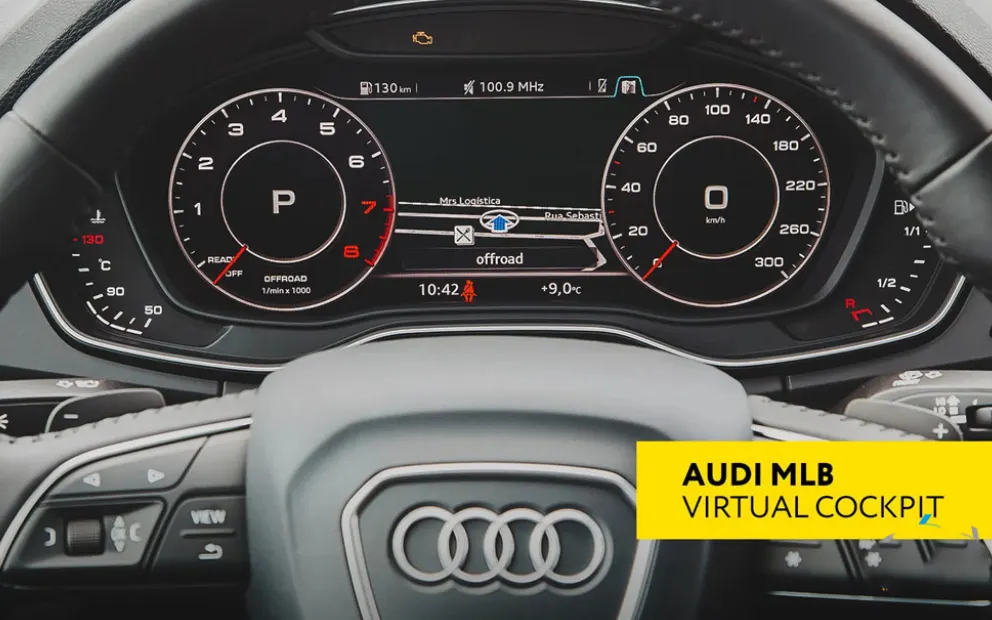
Why Audi MLB Virtual Cockpit Was a Different Kind of Mileage Job
MQB and MLB clusters are not interchangeable from a service standpoint. MQB instrument clusters often provide a path through the processor or a service mode that technicians have learned to work with. MLB Virtual Cockpit clusters, particularly the Bosch FPK1 and FPK2 units used across Audi’s MLB range, store mileage in a way that has historically required physical access to the cluster or a dedicated software route. That is why the job acquired a reputation for time consumption disproportionate to the actual data write: the labour was in getting to the board, not in changing the number.
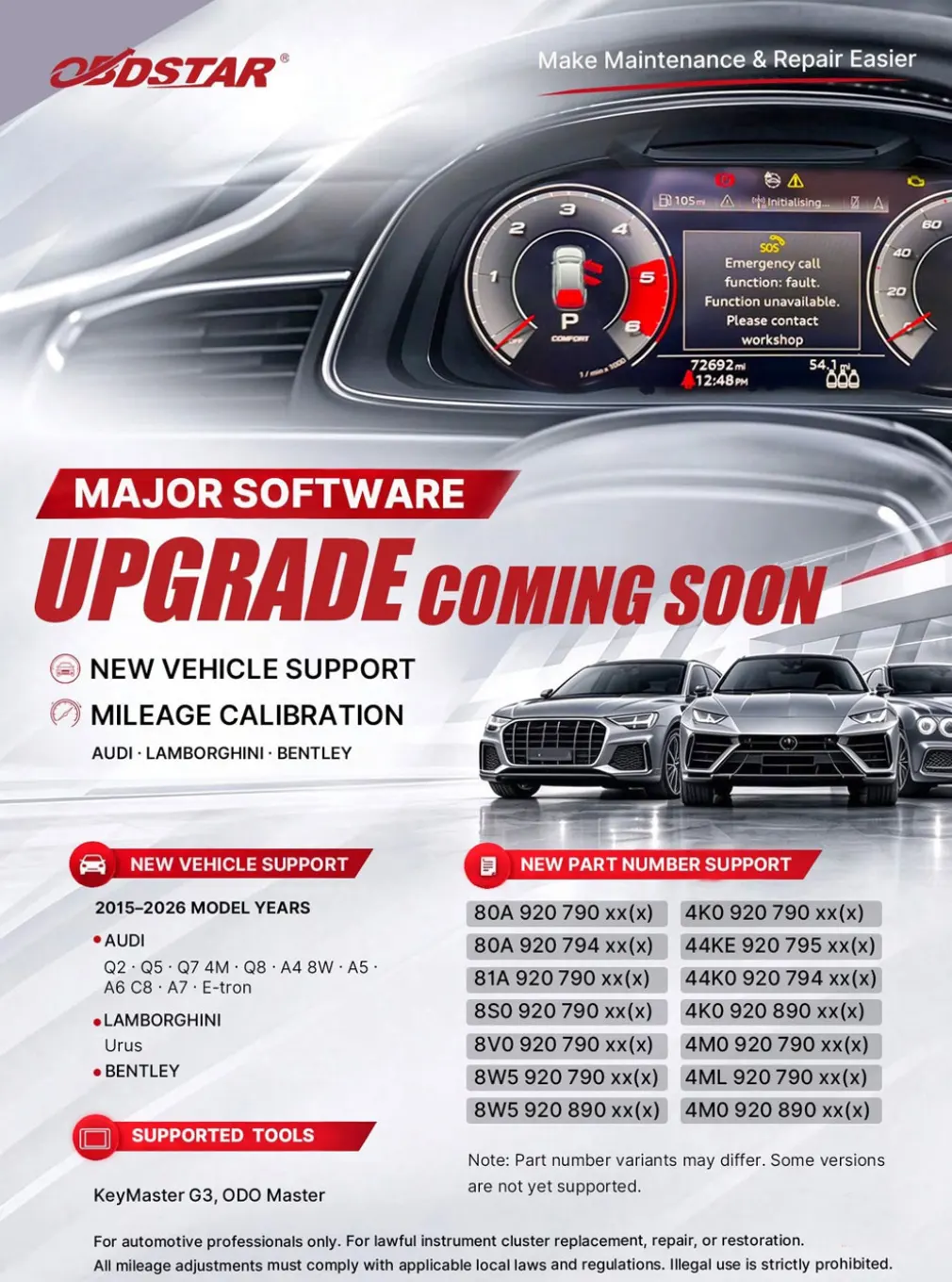
The supported vehicle list reflects how widely this cluster family spread. Audi Q2, A3 (8V), A4 (8W), A5, Q5, A6 (C8), Q7 (4M), Q8, e-tron and Lamborghini Urus all appear under the Bosch FPK1/FPK2 Virtual Cockpit umbrella, with model years concentrated in the 2015–2020 window. For a multi-make European workshop, that is not a niche cluster; it is a recurring visitor.
What “100% OBD” Actually Changes
The core change is straightforward: the mileage calibration is performed entirely through the vehicle’s OBDII port, without removing or disassembling the dashboard. In workflow terms, the vehicle stays assembled. The technician connects, the tool handles the data exchange, and the cluster remains in the car. The procedure removes the two most expensive elements of the old job—dashboard removal time and the risk of cosmetic or connector damage during cluster handling.
This does not mean the job becomes a generic OBD function that every scan tool can perform. The underlying data structure still has to be understood by the tool, and the supported cluster types remain specific: Bosch FPK1 and FPK2, in 18-pin and 32-pin versions. The OBD route simplifies access, not the technical requirement for correct cluster coverage.
Where the OBDSTAR CG100X Fits in the Conversation
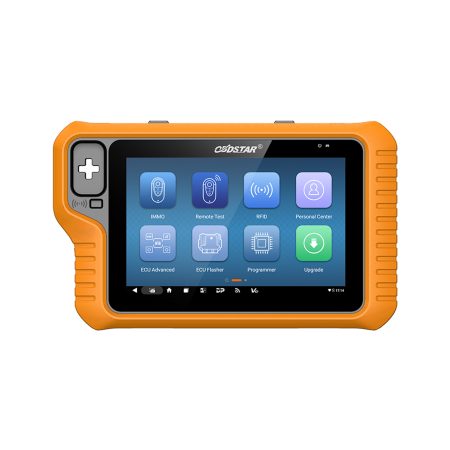
The CG100X is not a single-purpose mileage device. Its function set spans dashboard mileage adjustment, airbag reset, BCM and chip reading, and broader module read/write work, with a stated coverage of several thousand vehicle models for mileage repair and a mileage algorithm that operates within a tight error margin. That breadth is relevant here because the Audi MLB Virtual Cockpit development is not an isolated feature; it is part of a wider trend in which mileage correction, module replacement and immobilizer-adjacent work are converging on the same tool and the same OBD connection.
For a shop running the CG100X, the practical question is not whether one specific update line mentions MLB Virtual Cockpit by name. It is whether the tool’s coverage and update cadence keep pace with the clusters arriving at the bay. The CG100X update history shows a pattern of adding dashboard models and module types across VAG applications, including Audi-specific coverage. A technician evaluating the tool for MLB work should verify the current software release against the exact cluster part number and model year in front of them, because cluster coverage in this segment is version-dependent and evolves with each update.
The Practical Trade-Off: OBD Convenience vs. Tool Coverage
OBD-based mileage correction is not automatically the right answer for every Audi cluster. The OBD route is strongest when the vehicle is intact, the cluster is supported, and the job is a straightforward calibration. It is less useful when the cluster is already out of the vehicle for another reason, or when the specific software version falls outside the tool’s current coverage. In those cases, the older bench-oriented approach or a different tool path may still be the pragmatic choice.
The more useful way to think about the shift is as a workflow option rather than a replacement. An MLB Virtual Cockpit job that once began with dashboard removal can now begin with an OBD connection on supported clusters. That changes scheduling, bay occupancy and the labour content of the job. For a workshop that performs a steady volume of Audi mileage work, the difference between a dash-out job and an OBD job is not cosmetic—it is the difference between a half-day booking and a shorter, more predictable service slot.
What to Check Before Booking the Job
Three details determine whether the OBD path applies. First, the cluster type: Bosch FPK1 or FPK2, and whether it is the 18-pin or 32-pin version. Second, the model year and vehicle platform: the published MLB Virtual Cockpit OBD coverage centres on the 2015–2020 window, with the specific Audi and Lamborghini models listed above. Third, the tool’s current software level: mileage coverage in this segment is not static, and the CG100X’s value depends on running a release that actually lists the cluster in question.
For shops that already own the CG100X, the sensible step is to check the latest update notes against the Audi clusters on the schedule rather than assume coverage from the platform name alone. For shops considering the tool with MLB Virtual Cockpit work in mind, the OBD route is now a legitimate reason to look at the CG100X more closely—not because it eliminates the need for correct coverage, but because it moves the job from the dashboard to the diagnostic port, where the tool’s mileage and module functions already operate.
Recent Comment