
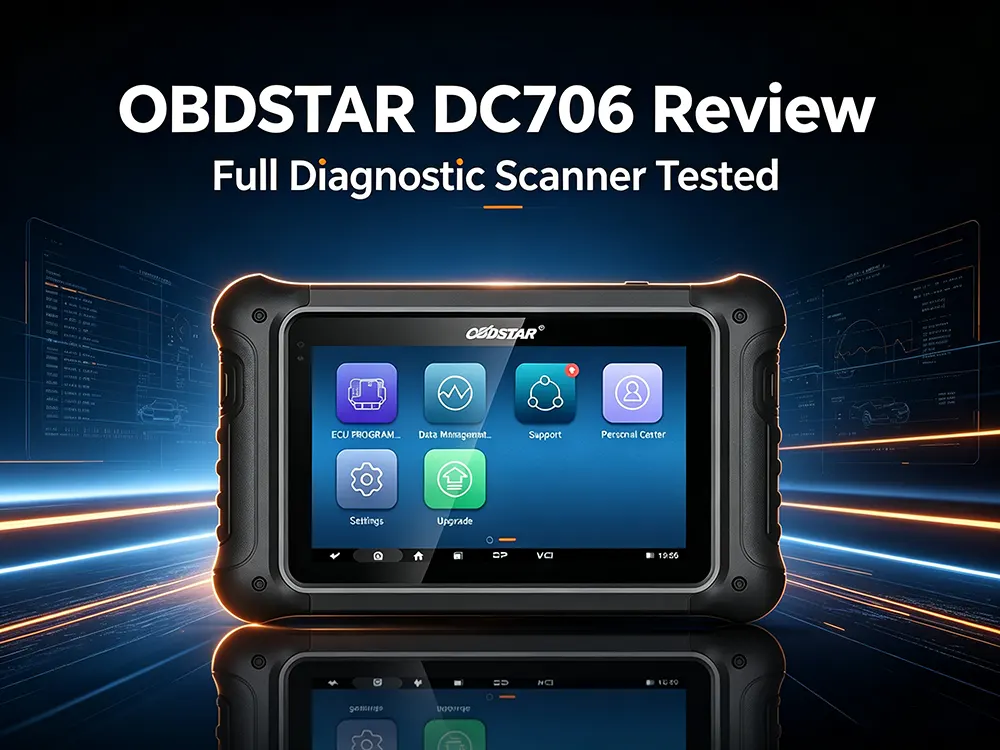
The OBDSTAR DC706 has emerged as one of the most talked-about ECU cloning and programming tools in the automotive repair industry. Positioned as a more affordable alternative to the IO Terminal, this tablet-based device promises to read, write, and clone engine control modules (ECMs), transmission control modules (TCMs), and body control modules (BCMs) across a wide range of vehicle makes. But does it deliver on its promises? To answer that question, I've combed through user reviews, forum discussions, and customer feedback from multiple platforms — including eBay, specialized diagnostic blogs, and professional forums like MHH Auto and Diagnostic Network. Here's what real users are saying about the OBDSTAR DC706.
What Is the OBDSTAR DC706?
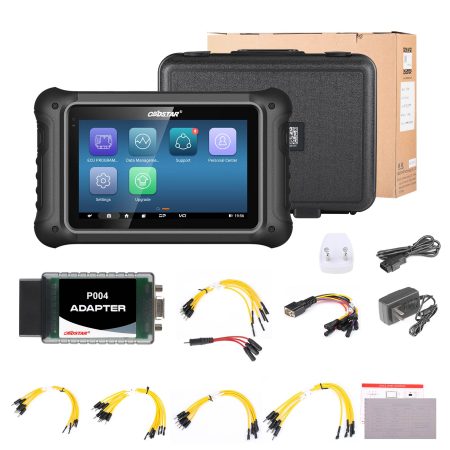
Before diving into the reviews, let's briefly cover what the DC706 actually is. It's a standalone tablet-based ECU programming tool designed for professional workshops and advanced DIYers. The device supports reading and writing of EEPROM, D-Flash, and P-Flash memory areas, as well as PIN code extraction and module cloning. It operates in OBD mode, bench mode, and boot mode, giving technicians flexibility depending on the module and vehicle. The full software version (covering ECM, TCM, and Body/Other modules) retails for around $1,400, with an additional P003 adapter costing roughly $149 for certain modules. Annual software updates are available for a couple of hundred dollars per year.
What Users Love: The Positives
Exceptional Value for Money
Across nearly every review platform, the most consistent praise for the DC706 is its price-to-performance ratio. One detailed review from an independent repair facility owner notes that the tool's coverage list is "pretty much identical to IO Terminal" but at a significantly lower price point. Another user on OBDSTARSCANNER.COM simply stated: "It's similar to I/O Terminal but much cheaper. It's good for what it is". For shops that can't justify the expense of tools like Kess, Flex, or PCMflash for sporadic in-house use, the DC706 presents a compelling alternative.
Impressive Cloning Capabilities
The DC706's cloning performance is where it truly shines. Users consistently report high success rates, particularly with GM and Ford vehicles. One technician successfully tested the tool on a wide range of modules including E39A and E92 GM PCMs, FCA RF Hubs, a Ford Continental BCM, a GM Bosch BCM, and a GPEC-2 PCM — all with clear and accurate guide diagrams. Another user reported that the DC706 handled full reading and writing on GM TCM T87 units, a task previously only possible with Flex and B-Flash.
The tool also excels at TCM cloning. Multiple users highlighted its effectiveness on DPS6 Ford TCMs, noting that it's "easy to connect when working mobile". One reviewer successfully cloned a Cadillac 6L45 TCM and a GM ACDelco E39A without issues. Audi and Fiat gearbox cloning also received positive mentions, with one user successfully cloning an Audi Temic VL381 0AW gearbox.
Regular Software Updates
Several users expressed appreciation for OBDSTAR's commitment to keeping the DC706 current. One early adopter noted that immediately after activation, an update added support for ZF 8HP TCMs on all makes, including Dodge and GPEC-4 PCMs in boot mode. A few days later, another update included GPEC-2, 2A, and 3 PCMs. As one reviewer put it: "It's encouraging to see regular updates and expanded coverage".
Ease of Use and Mobile Convenience
User feedback frequently mentions the DC706's user-friendly nature. One eBay reviewer simply stated: "It's so easy to use". Another noted that the tool saves time by clearly indicating which connector to use. The tablet form factor and clear interface make it practical for mobile repairs. A reviewer commented: "Good device for ECU, you can work with it with comfort and no fear".
Where It Falls Short: The Criticisms
File Management Can Be Clunky
The most frequently cited drawback is that working with files on the DC706 can feel "a bit clunky". While the tool is highly effective, the file management workflow isn't as smooth as some users would like. This seems to be more of a software interface issue than a hardware limitation.
No Built-in Checksum Calculation
A notable technical limitation mentioned by multiple sources is that the DC706 doesn't calculate checksums automatically. This means users may need to handle checksum correction separately when cloning certain modules, which adds an extra step to the workflow and requires additional knowledge or third-party software.
Reports of Crashing and Freezing
Forum discussions on MHH Auto reveal some concerns about stability. One user researching the tool noted that they had "read pretty good tool but has had a lot of crashing and freezing up issues". However, opinions are mixed — another owner "told me he never had any issues with his and he highly recommended it". This suggests that while stability problems exist for some users, they may not be universal and could potentially be related to specific hardware batches or software versions.
Limited Support for Newer Models
While the DC706 covers an impressive range of vehicles, some users noted limitations with post-2020 models, particularly on Chevrolet ECUs. This is a common challenge with diagnostic tools, but it's worth keeping in mind if you work primarily on late-model vehicles.
What Real Users Are Saying: Voices from the Field
One of the most detailed user reviews comes from Brian, an independent shop owner who tested the DC706 on multiple modules. His verdict? "Performed all reading and writing on all of these modules easily and successfully. VIN's were visible on eeprom and d-flash sectors, as well as pin codes". He also noted that the guide and pinout diagrams were "clear and accurate".
Another user shared their experience with a Volvo CEM clone, reporting that the DC706 "cloned CEM-H without problems once password was available". The tool automatically found the PIN and unlocked the unit for reading and writing.
On the DIY front, one reviewer successfully pulled IMMO data from a VW Jetta, confirming that the DC706 could read CS and PIN codes through IMMO data decryption. A user testing the tool on a Guzzi Miu G4 motorcycle engine control module reported that the DC706 "handled it well".
However, not every experience has been flawless. One user trying to clone a Bosch ME7.1.1 module reported connection issues, even after contacting OBDSTAR support. This serves as a reminder that while the DC706 is versatile, it may not support every module out of the box.
How Does It Compare to Competitors?
In comparisons with other tools, the DC706 is often described as "the most versatile overall". Against the CGDI FC200, the DC706 is praised for its broader compatibility with Chevrolet, Ford, and GM vehicles, as well as its BCM cloning and TCM programming capabilities. When compared to Foxflash, the DC706 is noted as being particularly strong at cloning, especially GM ACDelco ECMs and PCMs. The main trade-off appears to be that competitors like Foxflash offer reliable checksum correction, which the DC706 lacks.
Who Is the OBDSTAR DC706 For?
Based on user feedback across platforms, the OBDSTAR DC706 is best suited for:
- Independent repair shops looking for a cost-effective alternative to IO Terminal
- Technicians specializing in GM, Ford, and Chevrolet vehicles where the tool excels
- Shops that perform frequent TCM and BCM cloning — the DC706 handles these tasks particularly well
- Mobile repair technicians who need a portable, easy-to-connect solution
- Professional mechanics and advanced DIYers working on multiple vehicle brands
It may not be the best choice for:
- Technicians who need built-in checksum correction
- Shops that primarily work on the newest (post-2020) vehicle models
- Those who require extensive European vehicle coverage beyond what the DC706 offers
Final Verdict
The OBDSTAR DC706 has earned a solid reputation across multiple review platforms for good reason. It delivers professional-grade ECU cloning and programming capabilities at a fraction of the cost of competing solutions. Users consistently praise its versatility, ease of use, and the company's commitment to regular software updates. While it's not perfect — the clunky file management, lack of checksum calculation, and occasional stability issues are real concerns — the overwhelming majority of users recommend it as a valuable addition to any workshop's toolkit.
As one reviewer aptly summarized: "IMHO good tool. Like every other tool in this kind of business, does some things really well, some less well, and some not at all. And from time to time you want to throw it at the wall, and then, the next job paid almost pays for the week". For most professional technicians, the DC706's strengths far outweigh its weaknesses, making it one of the best-value ECU cloning tools available today.
Recent Comment
Owen Foster
Aug 5, 2026This review provides a balanced, real-world look at the DC706. Users love its exceptional value, strong GM/Ford cloning capabilities, and regular updates. However, drawbacks like clunky file management, no built-in checksum correction, and occasional stability issues are noted. Overall, it's a cost-effective powerhouse for most workshops despite these flaws.